
The School
CFVVM
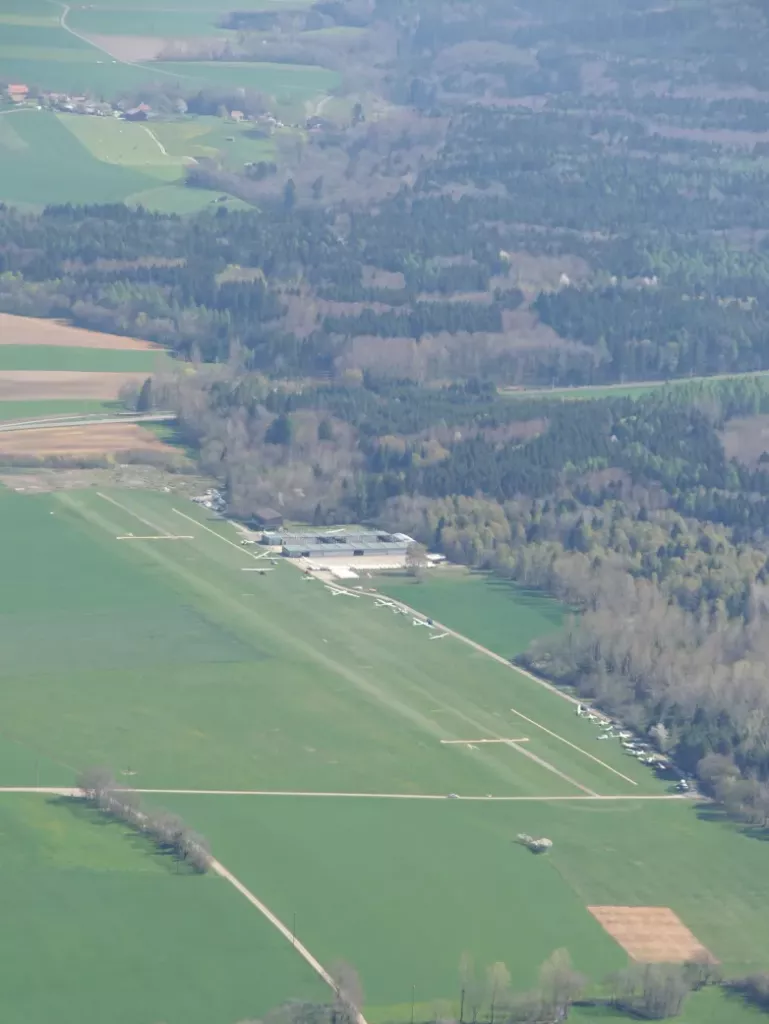
The Montricher Gliding Training Center is licensed by the Federal Office of Civil Aviation. We offer the complete glider pilot training program (SPL) as well as various possible extensions.
Basic Training
The theoretical portion covers the following subjects:
- 10 - Air Law
- 20 - General Aircraft Knowledge
- 30 - Flight Planning and Performance
- 40 - Human Performance
- 50 - Meteorology
- 60 - Navigation
- 70 - Operational Procedures
- 80 - Principles of Flight
- 90 - Glider Radio Communication
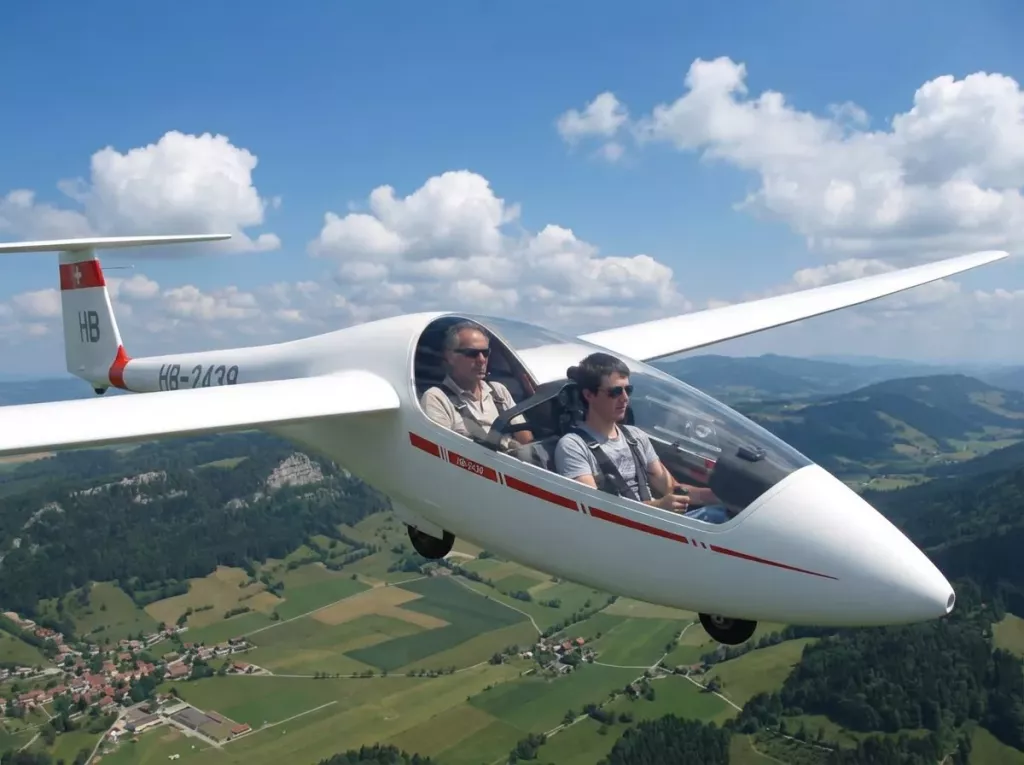
Throughout your training, you will always be accompanied by an instructor. Practical training will take place in a two-seat dual-control training glider, as safety is paramount in our sport.
Once you are deemed capable of flying independently, the instructor will let you fly solo. This “solo flight” is always an unforgettable moment in a pilot’s life.
Learning to fly takes time; as a general guide, the average duration of basic training is about one and a half seasons.
All theoretical subjects are taught during the winter off-season from November to April and are subject to an exam.
Once you have mastered all aspects of glider piloting, you will take a practical exam to obtain your license under the supervision of an expert appointed by the FOCA.
With your license in hand, you will continue your gliding training by expanding your flight range.
Cross-country flying
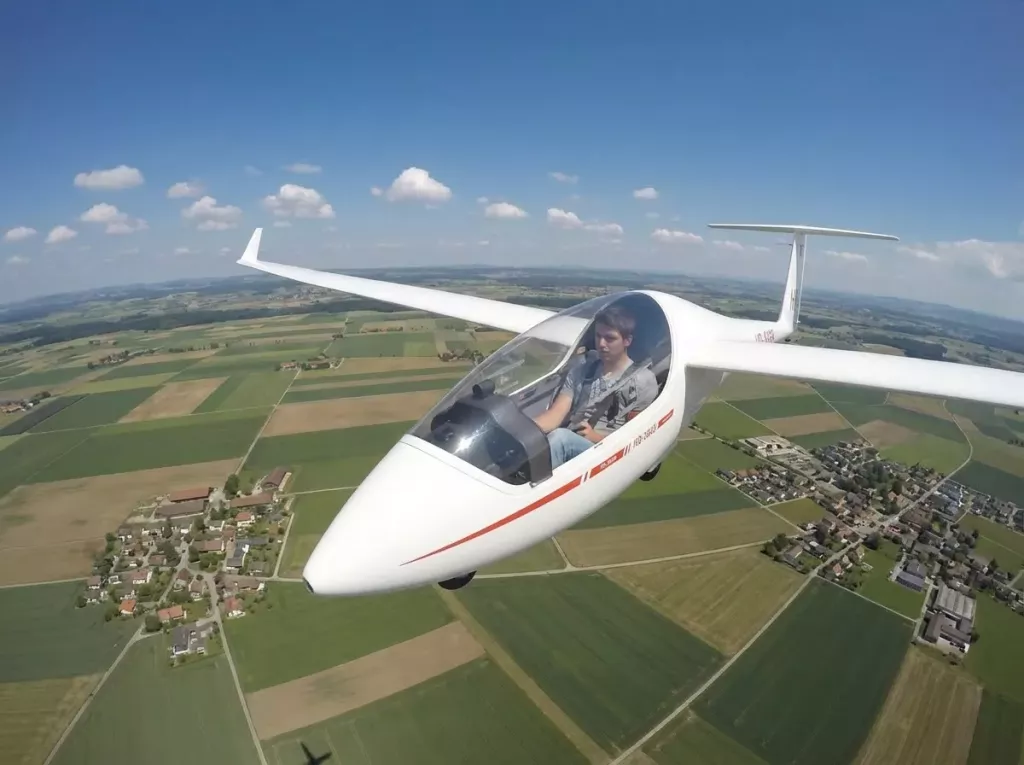
Flying a glider is one thing; cross-country flying with its long flights is another. Flying long distances requires expanding your knowledge of meteorology, aerology, geography, and navigation.
Flying in the plains allows you to gain experience with flights of 100, 300, 500 km, and beyond. The wide-open spaces of the plains offer this opportunity with minimal risk in the event of a landing in the countryside. Making an outlanding is part of our sport.
It’s up to you to soar over them as free as a migratory bird.
Mountain Flying
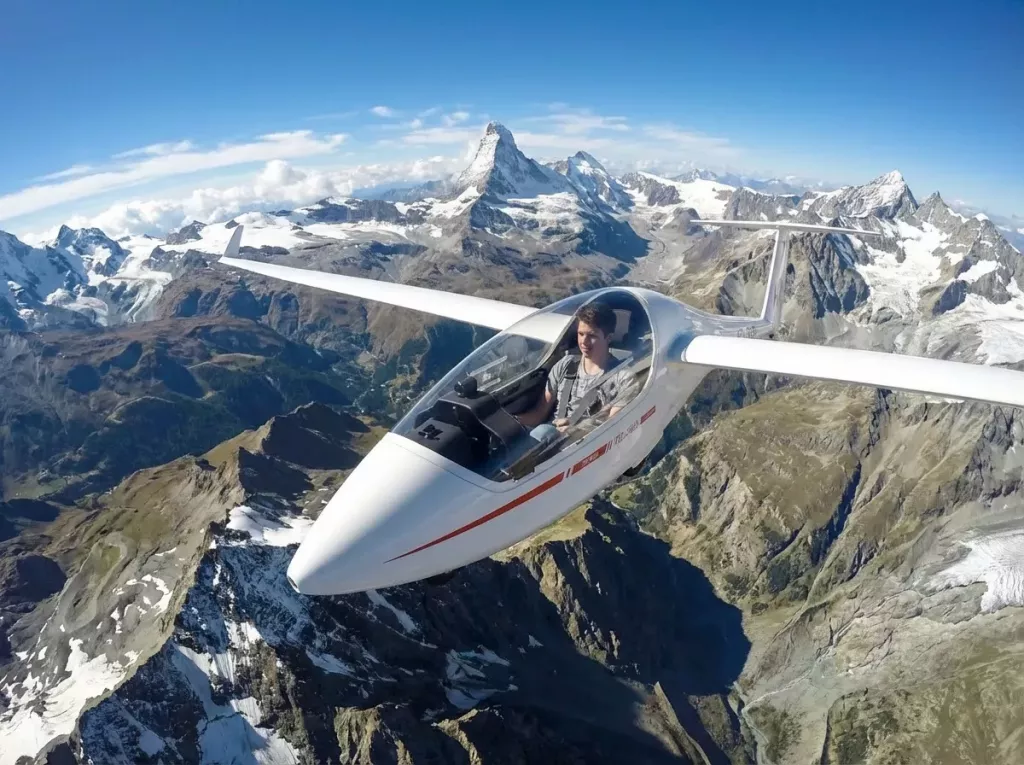
You’ve been flying for several seasons, your flying experience has grown, and you feel comfortable even far from your home field—could this be the time to head for the snow-capped peaks?
Mastering mountain flying requires experience, a thorough understanding of the terrain, weather, and aerology of the regions where you’ll be flying—your safety depends on it.
You’ll achieve this by taking specialized courses that will allow you to discover breathtaking landscapes.